Ireland 2024

Updated: Aug 10
Our legal delegation, which was comprised of lawyers and guest mainly from Texas and also from California, went to Ireland as a legal delegation on September 17-27, 2024. Our goal was to delve into Ireland’s Road to Peace stemming from its “Troubles,” the Rule of Law, and the importance Music has played in the conflicts and in the history of Ireland. Upon arriving we quickly experienced the beauty of Ireland and welcoming Irish people. It was as if we had stepped into a movie about Ireland with its green landscapes and never-ending hospitality. For the time we were in Ireland we experienced a simpler life that was modern, one where the divisions among the people seemed clear and out in the open, and where the people have feelings of happiness and sorrow at the same time. Their sorrow stems from the many years of conflicts, the killings, and the divisions of their families and communities. The “Troubles” refer to the 30-year conflict between Northern Ireland and the Republic of Ireland which finally came to an end pursuant to the Good Friday Agreement on April 10, 1998. This Agreement which was brokered primarily by U.S. Senator George Mitchell, President Bill Clinton, and British Prime Minister Tony Blair put an end to the violence, but the deep seeded resentment and hatred between the two sides persist.

During our time in Ireland our delegation had meaningful interaction and collaboration with barristers, professors, musicians, historians, and peace makers. We also explored the beautiful landscapes of Ireland including iconic locations like the Cliffs of Moher, the Book of Kells at Trinity College, and the Irish Rock ‘n’ Roll Museum. We also went to the Dollin Music House for an afternoon of fun Irish music and storytelling. In our adventure we learned that music was a vital part of the protest culture in Ireland during the Troubles and was used to express beliefs, raise awareness and fight for peace. We were told that music can heal wounds. But what I take away from this visit to Ireland the most is the peaceful feeling of just being in Ireland. This was a wonderful experience with exceptional delegates. I told the delegation that somewhere along the line it had become a magical experience.
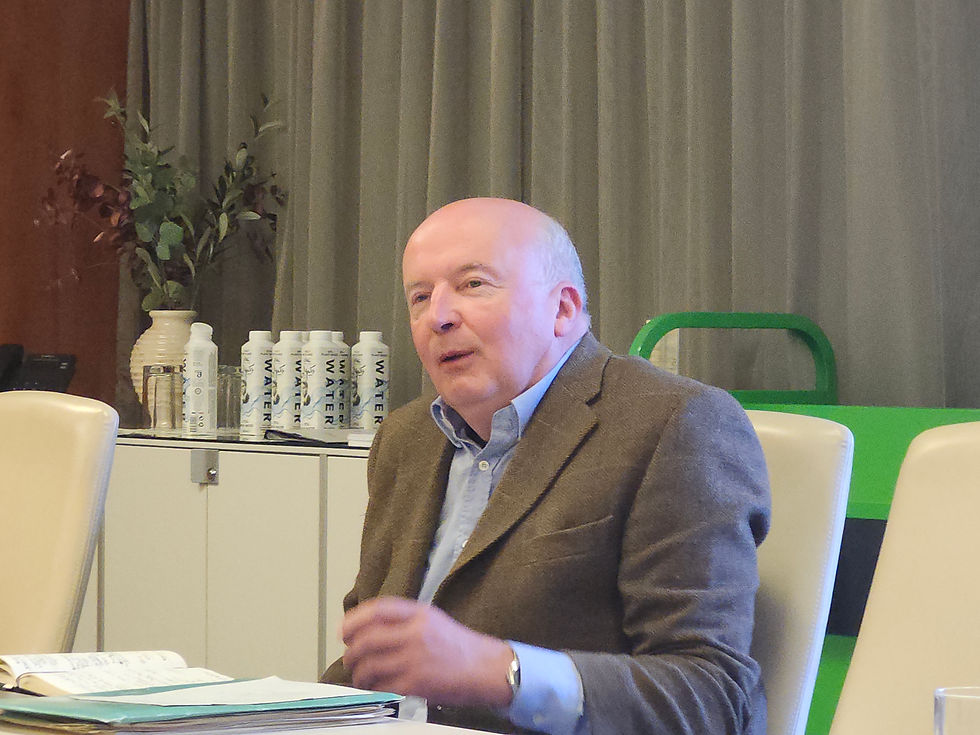
Our professional meetings were outstanding and especially informative. In fact, one of the delegates told me that all the questions he had about the Troubles had been answered on this trip. The meetings were quite remarkable as the past and present of Ireland came alive by listening to those who live it. Our first professional meeting was with Turlough O’Donnell who is recognized as one of the leading Barristers and mediators in Ireland. He was very generous with his time and invited a number of other lawyers who were members of their Bar Association. The 1 ½ hour exchange accomplished what we were hoping for – it brought lawyers from America and Ireland together with a healthy exchange and better understood of each other’s situation and concerns. We met at a time when the Unite States was going through the 2024 Presidential election, and it was very clear that they felt one of the candidates was a danger to them and the world order. One young barrister expressed bewilderment that our country had gotten to this point. We also discussed many nuts and bolts of the practice of law. For example, the Irish legal structure follows the English model, where the bar is divided between Solicitors and Barristers.

The Barristers are the ones that go to court whereas the Solicitors do not, but rather are the gatekeepers and handle non-court matters. Barristers are not in firms or groups and are reliant on Solicitors to send them the litigation business. Although Barristers that have established a reputation can do quite well, one young Barrister told me he was struggling due to lack of business. After our meeting, our host Turlough took us to an Irish Bar with authentic Irish music and bought us all a Guinness.
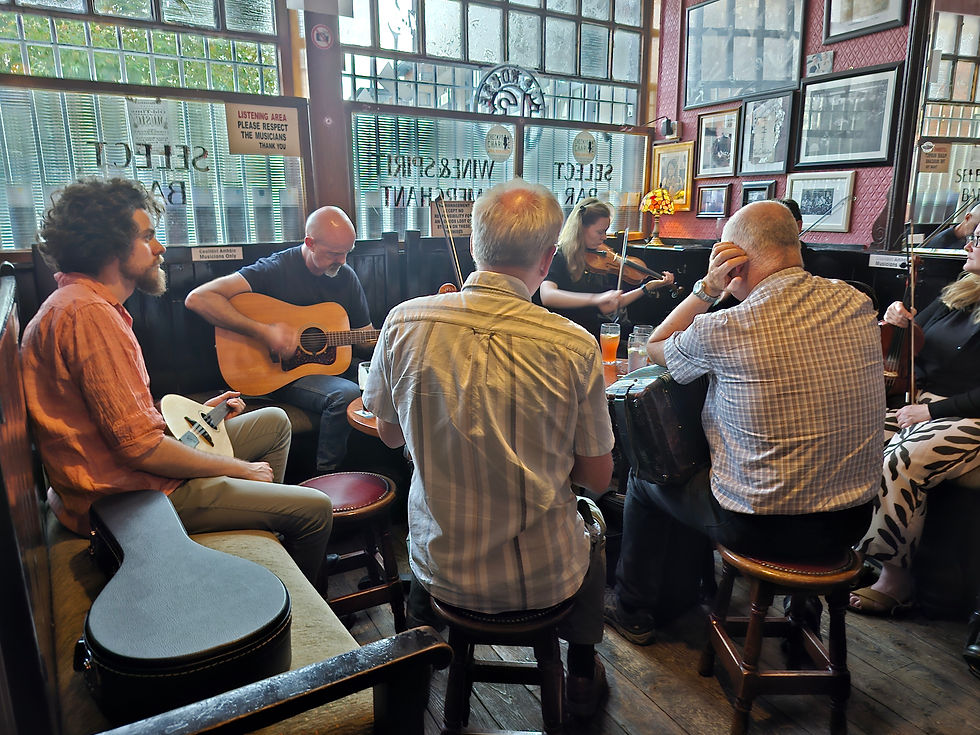
A good time was had by all.
We also had a meeting at University College Cork which is ranked as one of the top 100 law schools in the world. At the University of Galway, we were greeting by Dean Hogg and met with three of the schools leading professors. The law school is dedicated to impactful, high quality legal research. Dean Hoggg continues to communicate with us. Most impactful to me was the presentation of Dr. Maeve O’Rourke who is one of the leading voices for Human Rights in Ireland.
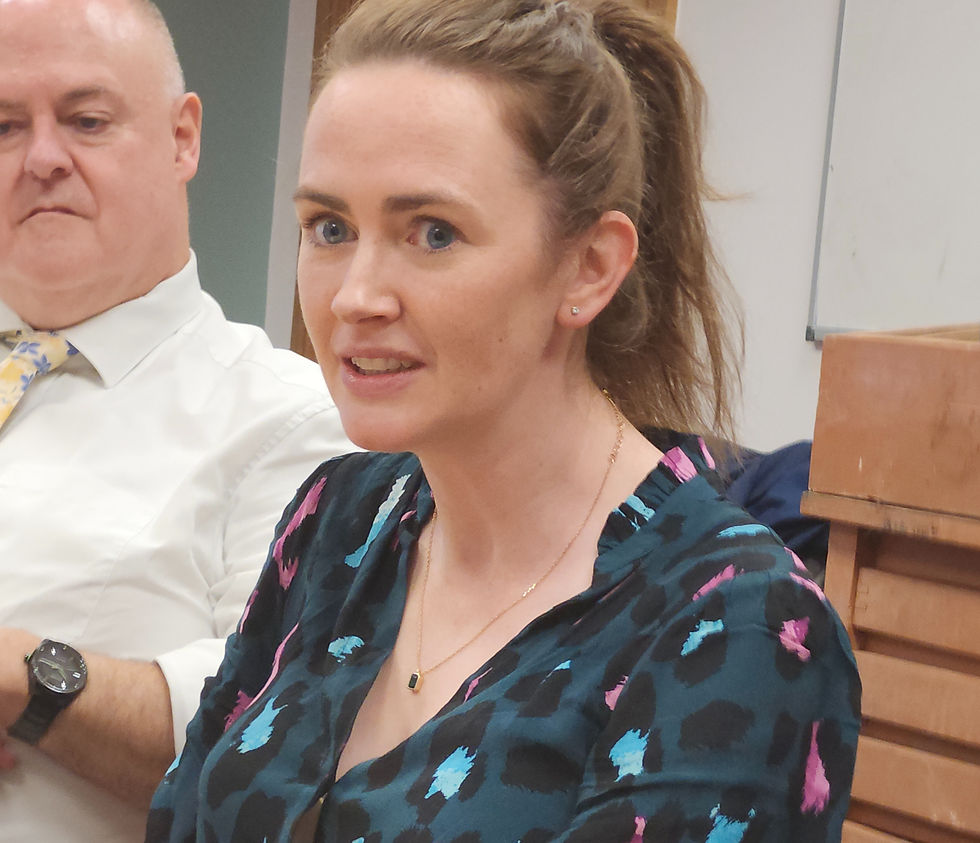

She has worked on approaches to human rights based on the truth telling process.
After lengthy discussions with our Irish hosts, it became clear that a softening of the attitudes of the North and the Republic is needed. This is something that cannot be legislated. So, the question is where to begin in what seems an impossible task. It was a pleasant surprise to find that there are individuals and organizations that are attempting to accomplish the reconciliation that is needed.
One example of an individual seeking reconciliation is Trevor Ringland MBE LL.B. Trevor is a lawyer and a partner in Macaulay & Ritchie and has earned a reputation in the field of litigation in Northern Ireland. He is a former British and Irish rugby player and is well known for his public profile on issues of reconciliation. In 2021 he was appointed as UK’s first special envoy to the United States on Northern Ireland. He is highly accomplished with many accomplishments and honors, but what interested us the most was his cross-community work in the area of reconciliation. In recognition of this he accepted the ESPY’s Arthur Ashe Award for the work of PeacePlayers.

Through this program he uses basketball to connect youth on both sides, the North and the Republic. It is remarkable, he said, that once the boys are on the same team and striving for the same goal the differences and long-standing resentment disappear, which is the goal. Those that were once considered their adversaries are now allies. By integrating the teams, he brought the parents into the process and soon they also softened the resentment against their former enemies. This concept is catching on and is a model for cooperation. This is a shining example of the concept voiced by President Dwight Eisenhower that if people talk they don’t fight.

We also met with Martina Purdy who was a high-profile BBC Northern Ireland political correspondent reporting on the peace process that led up to the Good Friday Agreement. She has written a book, Room 21: Stormont Behind Closed Doors which covers the rise and fall of the power sharing assembly in Northern Ireland. She was in Oslo as a reporter when David Trumble and John Hume shared the Nobel Peace prize for their contributions in bringing about the peace between Northern Ireland and the Republic of Ireland. And then, this highly accomplished public figure, quit the BBC in 2014 and entered religious life as a sister of Adoration in Belfast. We learned much from Martina. She told us that in the 1960’s Ireland was taking note of the protest around the globe and in particular the Civil Rights movement in the U.S. and Martin Luther King and Mandala. In Ireland, Catholics could not effectively vote as voting was based on ownership of property and Catholics did not hold any meaningful jobs. Having been shown that social change was possible, Ireland embarked on its own movement. They all knew that before meaningful change happened that had to be power sharing in Northern Ireland. Fast forward to today where there is a new cooperation post Brexit. Northern Ireland has been completely transformed and it is a time for peace. She and her former Barrister friend Elaine Kelly -who has also become a nun- are involved in activities for the good of the people and work for reconciliation by praying for this and for peace.
Irish people have joined the reconciliation cause in different ways. We also met with Tommy Sands who is a songwriter, folk musician, and well-known champion of using music to heal and promote peace. In fact, he is known worldwide for his anti-war songs and aims to bridge the community divide through the arts.

Our delegation left Ireland with the knowledge that it is on the right track, but there is still much to do to heal this beautiful country and its courageous people.
My thanks go out to Nanda Journeys for being the sponsor and coordinator of this delegation. I would like to also give a special thank you to the delegates, who were excellent representatives of our country, and who made the trip enjoyable.
Richard Pena,
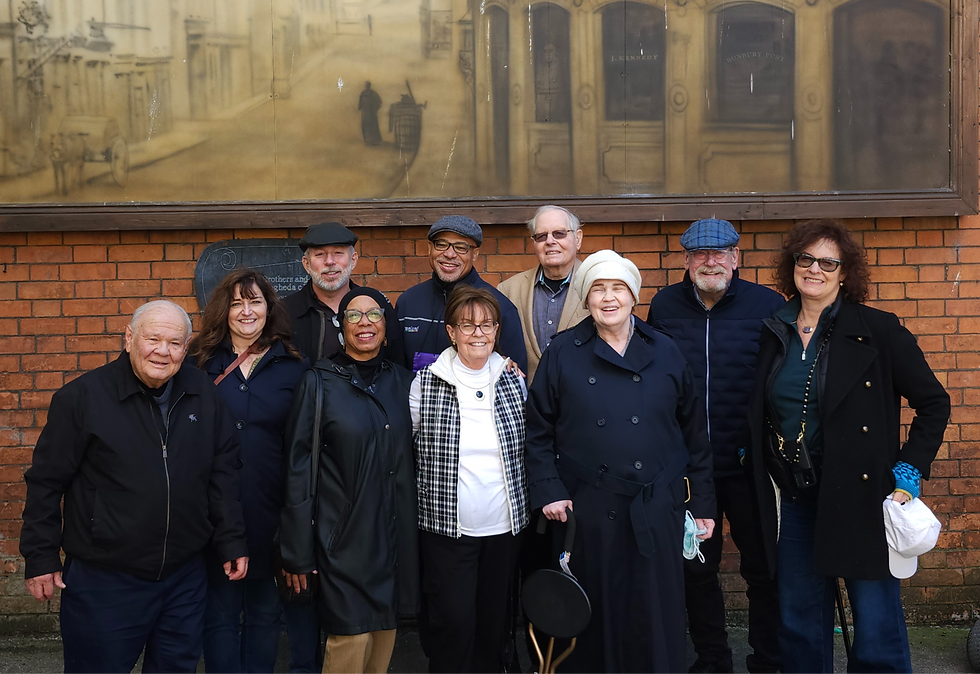
Delegation Members
Richard Pena, Delegation Leader
Carolyn Malley Pena, Co-Leader
Mary Louise Voegtle
Marc Leonard Sallus
Devora Sarah Cohen
Terry Richard Lord
Kenneth Lee Owens
Lena Anntoinette Brown-Owens
Robert Francis Loughran
Carla Butler Loughran


Comments